Ever typed “Picasa AI” and ended up at an obscure photo-editing site instead of a cutting-edge media-monitoring platform? You’re not alone. Our latest report shows that many curious users are hunting for Pikasa—and they don’t always spell it correctly. While we can sympathize with anyone who confuses us with a certain image organiser from the early 2000s, the misspellings reveal something important about how people search online and how brands can turn those mistakes into SEO opportunities.
Typos and trends: what people actually type
It’s easy to assume that your audience always enters the correct name into the search bar. Data says otherwise. When we analysed a thousand search queries that led visitors to Pikasa, we found dozens of alternative spellings. These aren’t just random keystrokes—many are logical mistakes based on pronunciation. Some of the most common variations include:
Top search variations used to find Pikasa in the last 3 months
| Search term | Impressions |
|---|
| picassa ai | 1,925 |
| picasa ai | 1,828 |
| pikasa analytics | 1,262 |
| picasa | 1,227 |
| picasa kya hai | 1,049 |
| picassa | 1,035 |
| piksa ai | 1,026 |
| picassa ia | 1,022 |
Typos such as “Picassa AI” and “Picasa AI” still route curious users toward Pikasa, which tells us how strongly legacy spellings shape discovery. Including common misspellings in metadata, FAQs, or glossary pages can help the right audience find credible answers instead of dead ends.
Misspellings also show up directly in performance data: they influence which queries surface your brand, which snippets win clicks, and where cannibalisation appears between similar URLs. Regular reviews in Google Search Console help teams decide which variants deserve dedicated landing experiences and which should consolidate to a single canonical story.
The bigger picture: what searchers care about
Many queries that reach Pikasa are anchored in fast-moving topics—from regional entertainment formats to wellness trends that spike overnight. When monitoring is continuous, teams can see those peaks in real time and align editorial, paid, and product messaging without relying on guesswork after the moment has passed.
Who (or what) is Pikasa, really?
Pikasa is not a nostalgic photo editor. It is an AI-powered analytics platform for organizations that need trusted perspective on what is being said online, by whom, and with what momentum. The same technology stack powers the Analytics.Live media monitoring and social listening platform used by businesses, policymakers, and media professionals who cannot afford blind spots.
- Localized monitoring: Pikasa tracks thousands of digital and social channels across more than thirty countries in real time.
- AI & machine learning: Models surface emerging narratives, evaluate sentiment, and help forecast how audiences may react as stories evolve.
- Human expertise: Senior analysts and data scientists translate complex signals into clear, decision-ready intelligence.
- Custom dashboards and alerts: Tailored views and automated alerts make sure each team sees what matters for its mandate.
What our data tells us about searcher intent
Looking beyond the typos, we saw several other clusters of queries:
- People looking for media-monitoring tools: alongside Pikasa-branded searches, users arrived with comparisons to platforms such as Talkwalker, YouScan, Brandwatch, and similar vendors—a reminder that evaluation journeys often start with category language, not a single trademark.
- Entertainment and pop culture: spikes tied to programmes such as Big Brother VIP Kosova and Big Brother Albania show how broadcast moments pull attention across social and news ecosystems. Monitoring makes it possible to connect those bursts to media coverage analysis without losing the wider competitive context.
- Health and lifestyle fads: recurring SEO-style queries (for example around diet trends or “keywords for weight loss”) illustrate how lifestyle content and commerce keywords bleed into the same attention pools as hard news.
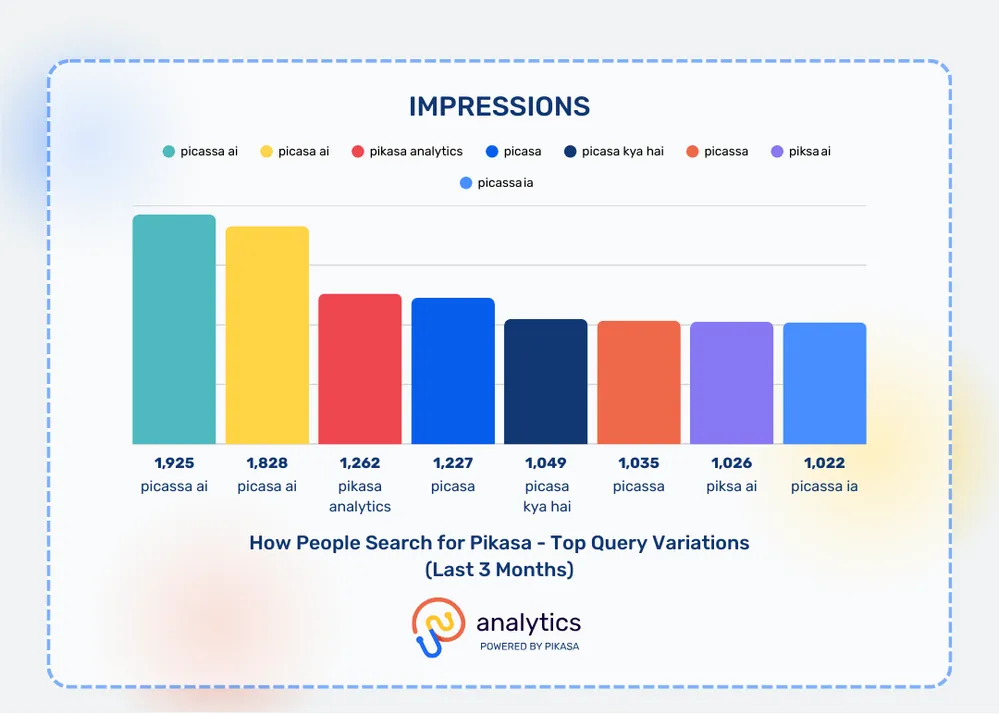 How People Search for Pikasa - Top Query Variations.
How to turn typos into traffic
Misspellings might seem like a nuisance, but they’re actually a gift. Here are a few takeaways for marketers and SEO professionals:
- Optimize for common misspellings: fold high-volume variants such as “picasa ai” and “picassa ai” into keyword maps, internal linking, and FAQ copy where it still reads naturally.
- Educate through content: publish short explainers that clarify who Pikasa is, what Analytics.Live does, and how you differ from unrelated homonyms.
- Leverage trending topics: use monitoring to spot cultural phenomena early, then decide whether to participate, contextualise, or stay quiet with evidence.
- Highlight your unique selling points: communicate differentiators such as geographic coverage, analyst depth, and model transparency so evaluation traffic converts with confidence.
Final thoughts
Typos are more than spelling mistakes. They are miniature maps of memory, language, and intent. For Pikasa, they explain why some users still hear “Picasa” when they read our name—and they highlight why robust monitoring, clear messaging, and disciplined SEO belong in the same playbook.
Whether visitors type Pikasa, Picassa, Picasa, or Piksa, the goal is the same: help them reach the platform that actually answers their question. If you want to explore how search behavior intersects with media and social listening for your organization, contact us and we will walk you through a tailored Analytics.Live workspace.